

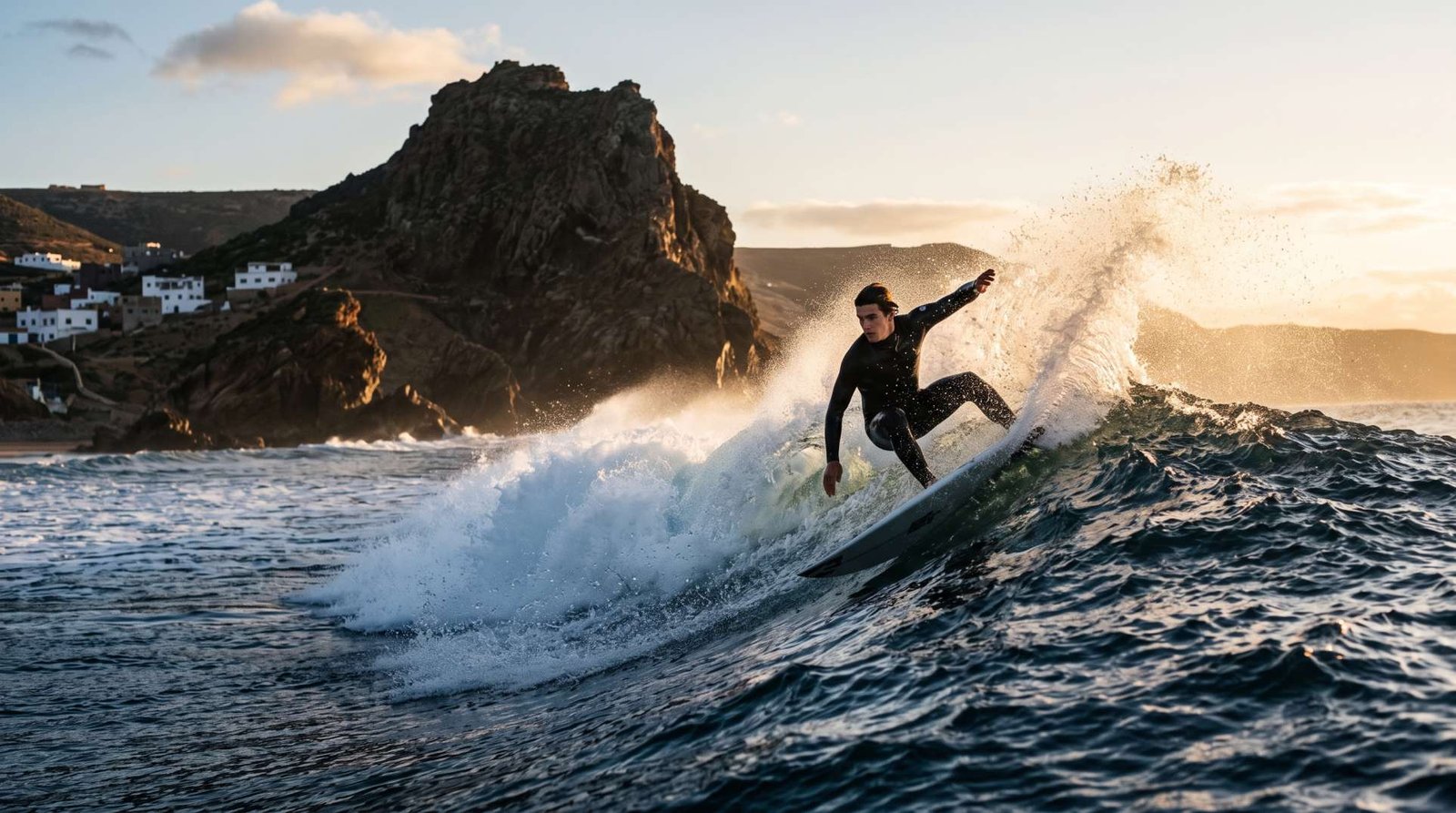
Introducing Devil’s Rock: Tamraght’s Most Iconic Wave
If Tamraght had a singular crown jewel, it would undoubtedly be Devil’s Rock (locally referred to by its Amazigh name, Imourane). Anchored by a rugged promontory jutting into the Atlantic Ocean, this spot serves as both the visual centerpiece of Tamraght and its most dependable surf arena. From playful waist-high rollers to overhead bowling walls that barrel across the reef, Devil’s Rock provides waves on almost every day of the winter season.
In this comprehensive guide, our surf coaches at The Cove Surf House break down the takeoff zones, optimal tide windows, safety hazards, and local secrets to help you score the wave of your trip.
The Anatomy of the Break: Point vs. Beach Break
Devil’s Rock is unique because it offers two distinct surfing experiences within 100 meters of each other:
1. The Right-Hand Point (Off the Rock)
Directly off the southern edge of the main rock outcrop lies the primary point break. Swells sweeping down from the North Atlantic bend around the headland, focusing energy into a fast, steep takeoff. The wave forms a distinct wall that allows two to three heavy carves, a cutback into the pocket, and an inside speed run over shifting sandbanks.
- Crowd Factor: High during peak winter mid-tides; early mornings (7:00 AM – 9:00 AM) are best for scoring uncrowded sets.
- Hazards: Submerged boulders near the initial takeoff zone; sea urchins lodged in crevices; occasional backwash on high tides.
2. The Inside Bay Peaks
Moving just 50 meters south of the rock toward the beach restaurant strip, the wave transitions into an open beach break. Here, multiple peaks break over sand, offering softer takeoffs and forgiving reform sections. This zone is beloved by longboarders and developing intermediate surfers practicing their bottom turns and trimming.
Optimal Conditions: Tides, Swell Direction & Winds
To score Devil’s Rock at its absolute best, look for the following forecasting parameters on your surf app:
- Swell Size: 4ft to 8ft (Swells under 3ft produce fun beach break peelers; swells over 9ft begin to wash out and push excess water into the bay).
- Swell Period: 11 to 16 seconds. Longer periods create defined lines that wrap cleanly around the headland.
- Tide Window: Low tide pushing to mid-tide is prime. At dead high tide, waves frequently bounce off the rock cliff face, causing choppy backwash.
- Wind: Light East / Northeast offshore winds groom the face into glass. North winds cause surface chop, while South winds blow out the bay.
Paddle-Out Strategy & The Rock Jump
Entering the lineup at Devil’s Rock depends on swell size and your comfort level:
- The Beach Paddle (Safest): Walk 50 meters south along the sandy shoreline and paddle out through the natural rip channel. While this requires a bit more paddling stamina through whitewater, it completely eliminates the risk of hitting the rocks.
- The Rock Jump (Advanced Only): On mid-to-high tide, experienced locals walk out along the southern shelf of the rock, wait for a lull between set waves, and jump cleanly into the deep water channel. Caution: Never attempt the rock jump without first observing local surfers and ensuring the tide is sufficiently high to cover underwater ledges.
Post-Surf Rituals at Devil’s Rock
One of the greatest joys of surfing Imourane is the apres-surf culture waiting on the sand. Directly above the high-tide line, local beach shacks serve freshly brewed Moroccan spiced mint tea, freshly squeezed orange juice, and charcoal-grilled sardines caught that very morning by local fishing dories.

TheCove
Ready to Surf? Book Your Stay Directly with Us
From cozy shared spaces to private sanctuaries, our rooms blend comfort with coastal charm — designed for surfers, digital nomads, and travelers alike.
Book Now at The Cove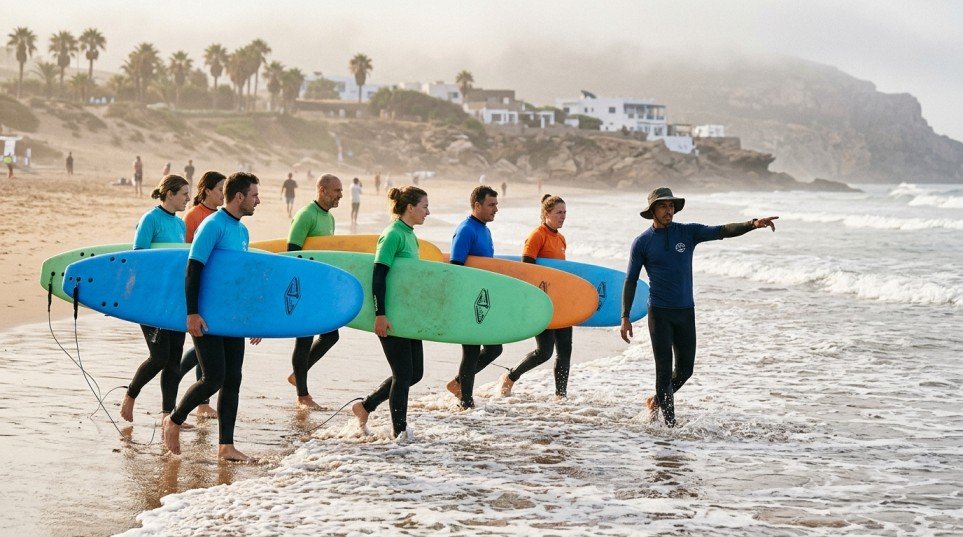
Surf Lessons in Tamraght: A Beginner’s Guide to Your First Waves
Taking surf lessons in Tamraght is one of the easiest ways to learn. The water is cold-ish but...
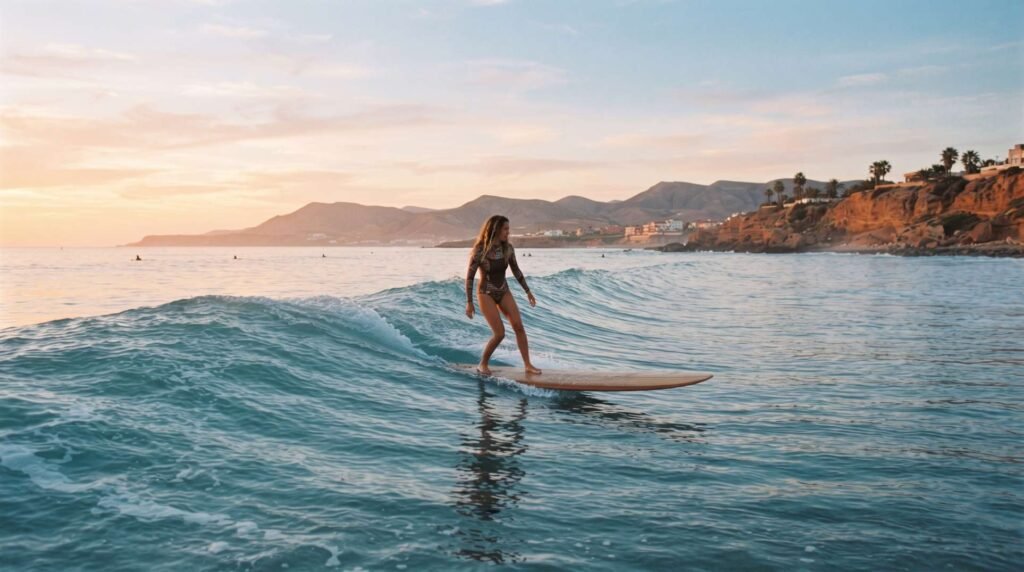
Banana Beach Surf Guide: Longboarding, Tides, and Local Lineup Tips
The Gentle Charm of Banana Beach Located at the southern boundary where the village of Tamraght blends into...
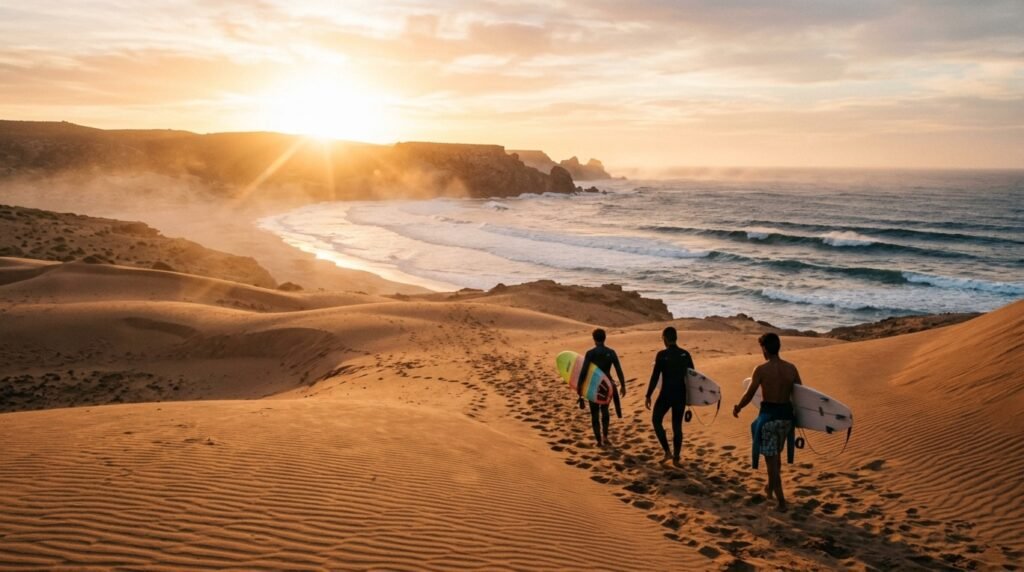
The Ultimate Tamraght Surf Guide: Spots, Seasons, Tides & Wave Breakdown
Why Tamraght is Morocco’s Premier Surf Destination Nestled along the sun-drenched foothills of the Anti-Atlas mountains overlooking Taghazout...